
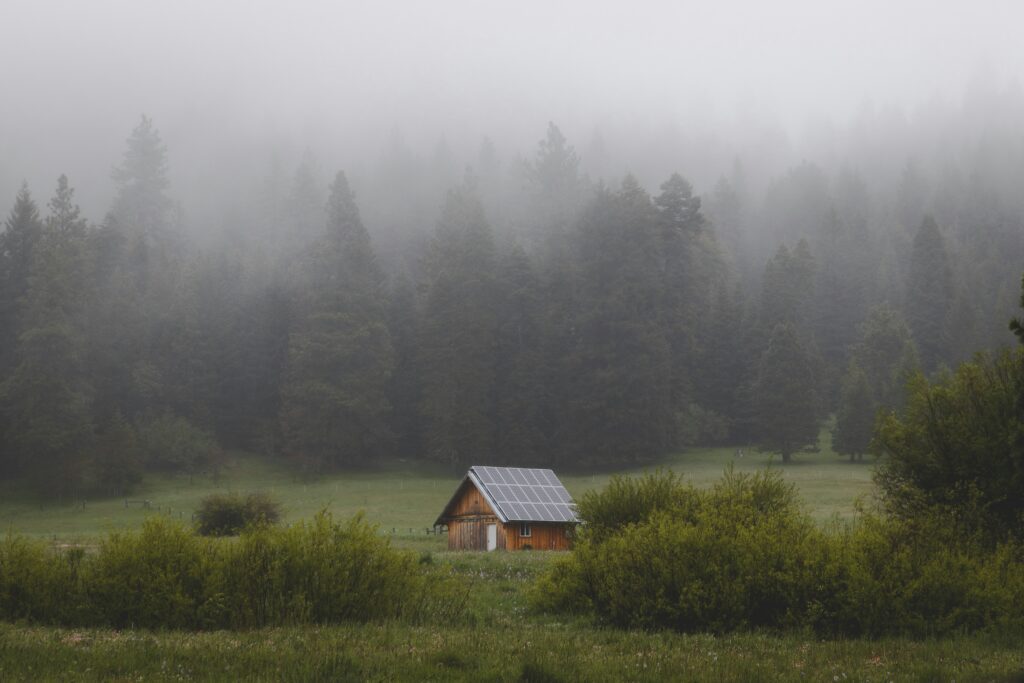
Awesome! I entirely rate the overall comfort of the off-grid lifestyle, very highly! Starting out off-grid, there are so many freedoms that many grid-tied people don’t expect. For example; like the ability to just sit there and enjoy nature often. Here are the aspects of life that you will need to be aware of, however you live off-grid. Aimed at people who are brand new to living off grid in the UK.
Areas you need to be aware of:
There are lots of things you need to manage:
- Money
- Water
- Food
- Shelter
- Heat
- Power
- Showers
- Sewage
- Rubbish
- Transport
- Documents and Post
- Health (they will assume you are homeless, and ask questions)
Summary of how.
Realistically the easiest way to be starting out off-grid might be with a vehicle, such as Vanlife. Which is a bit more grid tied. Or perhaps on foot, as a backpacker. You do have to watch out for the random people who disagree, and just not engage. You can purchase a very small plot of land, with resale value. Then you can just move on and sell it again, when you are evicted. Or you can set up some longer term solutions using planning hacks, It’s going to take time to learn. I wrote a guide to living legally in a caravan or building a hut legally: Stop Hiding Your Caravan
Detail
Money
It’s not ideal, but most people starting out off-grid straight away make a claim for low income UC in the UK. This is for people either looking for a job, or working with any low or non-existant income. UC is not much, but it is literally enough to live on. You don’t need more than UC to live, but you will need to optimise. Forget about the housing element, or just keep a small flat for storage and as a back-up anyway. (Such as a random cheapest possible bills included room.)
You can use try using perks from banks to get better rates. Eg £3/month Disney Plus from Lloyds, and Gym + AI + Gaming + WeWork Hotdesk + Tinder Gold from Revolut starting at £15/month. Some of these overlap, and the change over time. Things like breakdown cover, and travel insurance (sometimes including your off-grid devices) can also be useful features of these bank accounts.
Most people will aim for some kind of part-time work, or aim to build some kind of small business. This has a lot to do with how you explain your value to others. If you don’t have something to say you might look lazy and people might take the piss. People often ask without asking what others do for a living. If there is no obvious answer, they can suspect things like drug dealing. Events work etc is a fantastic way to travel and do a whole summer with free living and income. Building a smallholding and managing a farm also looks good.
Keep your credit rating good, and you will be able to use a land morgage or large credit card balance, to buy land, which isnt available on low credit.
Water
You can rig up rainwater harvesting if you want to be remote, just simply lay a tarp out and collect the water. You can pull up water from a stream with a pump. But for both of these, you should probably filter it. There are also random springs in random places most people don’t guess, like in a random bush in a field. Or you can fill up a 20L heavy jerry can at most petrol stations. Another option is the groceries deliveries services. These services will often deliver everywhere even if it’s not an address. You can get by just by ordering the 2L and 5L bottles to the max allowance in bulk, along with your shopping. You’ll want at the very least 6L per person per day (4L for hygiene and cooking, and 2L to drink). I’ve done it with 4L, but laundry wasn’t really properly possible.
Food
When starting out off-grid just buy regular food, (at least until you are ready, if you want to grow it). I don’t think anyone I’ve seen is 100% off grid for food entirely, even if they produce lots of it. Pasta, beans, rice, potatoes etc, all cheap. Get a nice stainless pot for the fire, or a simple gas stove. You can use Dutch Ovens if it’s a base camp to cook things like pizzas on the fire. Dutch Ovens are very heavy. You can foil wrap stews and boil them on the fire too, this is the lighest way that is reliable. You can, with skill, roast in the embers using by burying the food wrapped in leaves. Fridgeless is totally possible (I almost forgot), just visit the shop every few days for fresh stuff, or wrap in a blanket with a well sealed bag of ice from the shop freezer. Here are some examples of fridgeless meals: https://www.reddit.com/r/Advice/comments/1qe54eg/more_no_fridge_meal_options_for_convenience/
Shelter
You can go from tarp and bivvy, via caravan, to mansion sized cabin. Your choice. A tent is often fine. If you are backpacking, but you might struggle for heat. Staying in tents in the cold, is diffucult without professional clothing because of things like condensation. So, aim to keep the fire alight while you are awake in cold climates. Lve outside the tent under a parachute style shelter using a fire. Be wary of trees that might fall.
If you rely on clothing, its just like sitting outside. It’s totally possible, but there are pros and cons in the UK climate. Use your sleeping bags to stay warm when the fire is out or when you are cold. Sharing body heat is actually efficient while sleeping, if you want to do that sort of thing. You might find a good bell tent is optimum for space inside, but too heavy to backpack with. My advice, basically just move within 24h if you are asked, and don’t play the eviction game, it will make nearby areas hostile. You can often ask the people who ask you to leave if they suggest anywhere, It’s not always good. Try random unmaintained patches of woodland beside fields. Be prepared for their slurry spay, haha.
Here is an example of a tent: https://www.amazon.co.uk/dp/B0CWRSFWP9 with built-in heatproof ground sheet and stove jack opening. Or, how to build a cabin: Small House Sanctuary
Heat
This one is tricky. Some people like the mini gas heaters you get with 3 hours of heat per container. In my opinion that’s too much faff. If its a blue flame it will cause condensation badly. You can use the conduction gas heaters with a large heavy gas bottle ferried in by taxi, like the ones in a caravan. But they should be modern and safe. Other options are the diesel blown air heaters which are cheaper than regular central heating sometimes, starting at £100. They can also have quality issues. My suggestion, to get a small “hot tent” (as above tent example), and use a small wood burner. You can move your tent around to be near existing dead wood. Its fairly simple to do minus temps with a cheap wood stove. e.g. https://www.amazon.co.uk/dp/B0F9P53GLY, plus a stove jack cut to size.
Make sure your sleeping bag is rated to the lowest possible temperatures that could happen. e.g. -20c in the UK. Bear in mind that the Extreme rating usually given on the sleeping bag, is with full thermals and clothes. It’s a “you won’t die” rating, it’s not “use me comfortably at this temperature” rating.
It’s good to cover this multiple times, with outdoor clothes, tent stove, and sleeping bag.
Power
Again lots of options, and it can get complicated when starting out off-grid. If you are backpacking, you will want low power belongings. You can feasibly carry 1x100w folding or flexible panel per person, but it’s more than some people need. You’ll probably want a panel with built-in USB-C output. You’ll want to add few 99wh USB-C batteries. Tou can swap these out and leave them places etc, and the size is easier than a “solar generator”.
Most things charge from USB-C, even Ember Travel Kettles. You’d need at least 1 100w panel to work often on a computer. Otherwise, if you don’t want to use the computer, you can basically get a quick charge battery pack. You can then charge it when you get a coffee in McDonald’s. The MacBook Air (e.g. m1 or m2 air), is the lowest wattage usage computer. It uses 4-10watts if you aren’t gaming. There are tablet pcs that go down to like 2 watts, e.g. Lenovo m7 tab. That means you can use it for 4/5 hours a day with one 100w panel most of the year. Just top it up with a charge or two in winter. Lights don’t use much. Dumbphones are the lowest wattage way to watch youtube.
Showers
You can use bottled water, or any water, just a dip in a pond you don’t drink from etc. Or, you can get a gym pass or pay £2 at the local swimming pools. There is a program called ClassPass which lets you use lots of gyms internationally whenever you want to.
There are also Hotdesking providers, with showers, some for £60 per month per desk. These can be found around in some places in the UK monthly, or by the hour. If you use a Hotdesk you can also use a random desk to work and charge devices etc. They are usually warm places to spend time in winter too. Make sure you check they are happy for you to use a Hotdesk that way. The easiest way to shower, is to put a metal bucket on the fire to warm the water. Then, use a cup to pour it as a shower. Often people will aim to keep most of themselves clean using baby wipes for as long as possible. Just get used to covering your hair, which also helps with heat retention.
Sewage
You’ll probably dig a hole (a latrine), and squat. Or again use the gym, swimming pool, or a local restaurant. My best advice here, is to choose a remote spot at least 25m away from camp and your water supply etc, and make a hole in the ground. It should be the same size as a regular spade head would be, thin (25cm wide max). You will put one foot each side and squat, aiming takes practice. Then cover the top 20cm of the hole again with dirt, when it is full. Once you have filled one, make another hole nearby, enough distance away the ground is solid.
Make sure cars driving past, and walkers can’t see you. Put some soil or sawdust on top after each time you use it, it will stop it geting quite so bad smelling. It’s easier to squat over a small hole. I think squatting makes it easier to go, just remember you’ll want dry bog roll, don’t leave it out.
Rubbish
One off Biffa collections can be only about £50-100 for several bags to any location. You can do this once in a while. Or if there is already a nearby lorry route, the weekly collections are about £8 per week per bag. Otherwise, double bag, and take in a taxi to a waste disposal plant, for home waste, or drop in a council bin. Avoid using a business waste point, because they pay a lot for them. You can burn quite a lot of the waste as well, and bury food waste.
Transport
Near a bus stop is great, check Google Maps. There’s taxis/Uber in most places (sometimes unavailable), you can use e-bikes (fat bikes in snow). You can use lifts, or get a car. Be prepared for the weather if you are snowed in a remote place. You need the supplies to live until weather calms down in case you are snowed in. Otherwise, get out to a hotel or a friends house nearby urgently.
Documents and Post
Lots of delivery services other than Royal Mail, will make a couple of attempts to find you. Sometimes local couriers can relay. You can use a Virtual Address (not like a PO box) as a document address, if it’s a delivery address for your ID not a residence address. Your official ID residence address will need to be NFA (No Fixed Abode), or a very trusted friend who you pay council tax for. Virtual Address providers can forward mail and parcels to whatever friend or post office nearby, or scan it. In the UK the top 9 banks are also legally required to provide “basic accounts” to people without addresses. You can, in theory, pick up statements in the local branch. Sometimes you can pick up post from the reception of a Hotdesking provider as a virtual address too. You can use the Jobcentre as an address if you are working with them. Sometimes you can use churches. Here is a guide on how to get an actual address for a long term camp: https://www.reddit.com/r/OffGrid_Classifieds/comments/1rhorqf/comment/o93jdj5/?context=3
Health (they will assume you are homeless, and ask questions)
You can attend any GP or A&E at any time, as a temporary patient. Just call a local GP to ask if they can do the appointment slots for you as a temporary patient. Say that you need this because you are “in the area travelling”. Some banks have also have officially licensed virtual 24/7 private GP accounts included. Santander currently offers 24/7 private GP perk with their £17 per month account. Beneden is another heathcare service for £16 per month. Choose Benenden if you want a Mental Health Support Hotline, rather than breakdown, travel, and device cover. Bupa includes this service also, for sometimes under £100 per year (if you are younger), along with complete private hospital care. Other banks have had the GP perk in the past.
You can then ask that doctor, and get a referral to hospital from them if you need to. None of them will pay to treat a pre-existing illnesses when you take out the cover, but the hotlines and GP access are a perk of their own. They can offer a referal to the NHS. If you are in one spot for a while, just register with an NHS GP, if you want to, and save the money. But, perhpas don’t tell the NHS too much about your off-grid life, they often won’t understand it. Just be confident you meet your living needs, and go to them if you actually have health hassle, like normal. Otherwise, they will action all sorts of homelessness and assessment protocols.
Good luck, I honestly hope you succeed starting out off-grid, and want to see you succeed, keep working this lifestyle out for people and keep posting.