
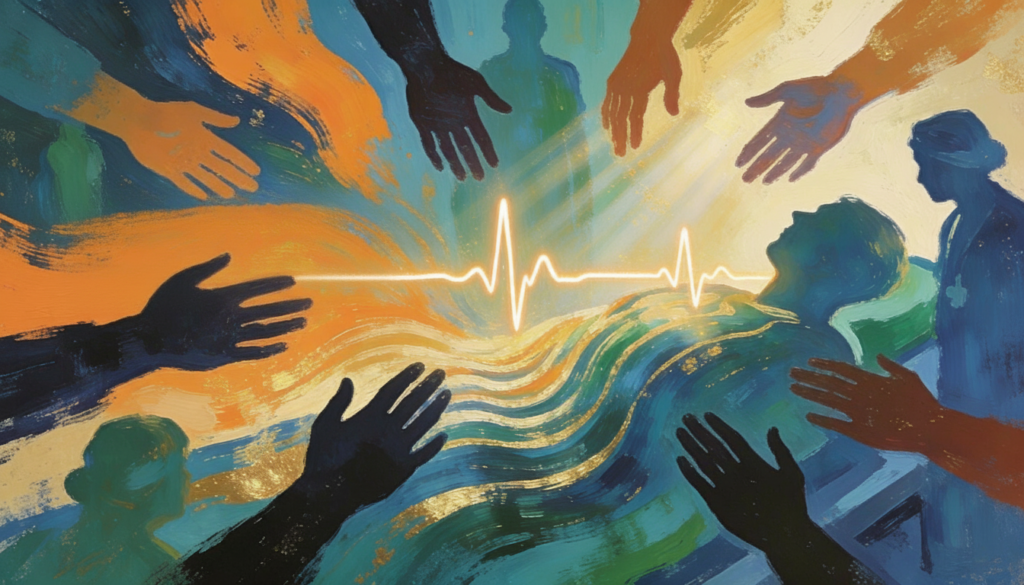
The Most Useful Skill You Can Learn for Free
First aid training sits at the intersection of practicality, altruism, and personal development. It’s one of the few valuable certifications available entirely for free—if you know where to look. The catch? You’re expected to volunteer a few hours a month in exchange. That’s not a cost; it’s a feature.
Every time someone collapses, chokes, or bleeds, the first 10 minutes matter more than the next 10 hours. In that critical window, trained bystanders save lives that would otherwise be lost. You could be that person. And the best part? Organizations worldwide are actively hunting for volunteers like you and will train you from zero experience to be genuinely competent first responder—for free.
This isn’t just about CPR certification to keep on a shelf. Real progression exists. Some volunteers have transitioned straight from untrained community member to fully qualified ambulance technician, paramedic, or firefighter—entirely through free volunteer programs. Others have found their professional calling. Most have discovered something equally valuable: a tight community of capable, level-headed people who show up when it matters.
How This Works (The Honest Version)
Before we dive into the options, here’s the straightforward deal: you get free training because you’re volunteering your time. Organizations like St John Ambulance, Red Cross, and emergency services don’t charge you because they gain something equally valuable—reliable, trained responders they can depend on.
The commitment varies wildly:
- Low commitment (8–16 hours/month): Community First Responders, basic volunteer roles
- Moderate commitment (20–40 hours/month): St John, some fire departments, 4×4 Response
- High commitment (on-call, irregular hours): Mountain Rescue, lifeboat crews, special constables
The training quality is exceptional because these organizations stake their reputation on it. You’re receiving the same courses as people paying £200–600 per course elsewhere. The only difference is you’ve committed to actually use the training to help people.
Emergency Response Organizations: Your Fastest Path to Impact
St John Ambulance (Global: UK, Australia, Canada, Worldwide)
Why it stands out: St John is genuinely unusual. Volunteers can progress from complete beginner to fully qualified ambulance technician ready for work—entirely free, entirely through volunteering. This isn’t a side path; it’s the actual qualification.
What you learn: First aid fundamentals (helping others at events) → first responder (responsible local response) → ambulance technician (taking on paid shifts aswell) → paramedic (if you choose to pursue it professionally at university). Early courses cover CPR, choking, bleeding, burns, fractures, and shock.
Commitment: Typically 1–2 shifts/week (16–24 hours/month), though you can start smaller.
Real progression: One of the few schemes where the first step genuinely leads somewhere. Volunteers have become career paramedics with zero cost beyond time investment.
Find your local chapter:
- UK: stjohn.org.uk
- Australia: stjohn.org.au
- Canada: sja.ca
- Worldwide: sja.org.uk/international
Red Cross & Red Crescent Societies (Global)
Why it stands out: Available almost everywhere. Red Cross positions range from disaster response to community health to administrative support. The training is incredibly thorough and recognized across borders.
What you learn: Community first aid, CPR, psychological first aid, disaster response, health promotion.
Commitment: Flexible (online options, weekend workshops, regular shifts).
Career angle: Strong pathway into humanitarian and health sectors globally. Red Cross volunteers often cite the role as foundational to careers in nursing, social work, and international health.
Find your local chapter:
- UK: redcross.org.uk/get-involved
- USA: redcross.org/volunteer
- Australia: redcross.org.au/volunteer
- Find globally: ifrc.org
Emergency Services: Police, Fire, Ambulance
These are separate but worth grouping because they represent the most direct entry points to emergency response careers.
Police: Special Constables / Volunteer Police Officers
What it is: You become a reserve police officer with real enforcement authority, not a reserve paperwork shuffler. In the UK, special constables complete a 20-week part-time training program and work minimum 200 hours/year. Equivalent programs exist in most English-speaking countries.
What you learn: Law enforcement, public order, first aid, conflict de-escalation, community policing. Full police powers after training.
Commitment: 200–300 hours/year (about 4 hours/week).
Why it works: You get police training, and experience that genuinely looks impressive on applications. Many special constables transition to paid police roles.
Find your local program:
- UK: Police force website (search your local force + “Special Constabulary”)
- USA: Many departments have reserve officer programs (varies widely by state)
- Australia/Canada: “Auxiliary Police” or “Reserve Police Officer”
Fire Service: Volunteer Firefighters
What it is: You’re a trained firefighter responding to structure fires, vehicle accidents, and rescue calls. Fire service volunteer programs are robust and genuinely serious.
What you learn: Firefighting techniques, hazmat response, vehicle extrication, rescue operations, emergency medical response (often to EMT level).
Commitment: Varies (20–50 hours/month), though some departments allow flexible on-call shifts.
Career progression: Clear pathway to paid firefighter roles. Many professional firefighters started as volunteers.
Find your local program:
- UK: Local Fire and Rescue Service website
- USA: nvfc.org (National Volunteer Fire Council)
- Australia: State Fire Services volunteer programs
Ambulance Service: Emergency Medical Technicians
What it is: The lesser-known goldmine. Ambulance services train volunteers as EMTs and paramedics because they need responsive crews. Some services offer free apprenticeships or paid roles for volunteers who progress.
What you learn: Emergency medicine, patient assessment, cardiopulmonary resuscitation, trauma care, advanced life support (depending on level).
Commitment: Typically 1–2 shifts/week (on-call hours vary).
Career progression: Associate Ambulance Practitioner → Ambulance Technician → Paramedic. Real salaries at the end. One of the best-kept secrets in free medical training.
Find your local service:
- UK: Search “[Your Region] Ambulance Service volunteer”
- USA: Community Emergency Response Team (CERT) or local EMS volunteer positions
- Australia: Ambulance Victoria and state equivalents
Water, Rescue & Coastal Organizations
RNLI Lifeboat Service (UK, Ireland, Gibraltar)
What it is: 95% volunteer organization. You train to rescue people in life-threatening situations at sea. The training is world-class.
What you learn: Navigation, seamanship, casualty care, boat handling, rescue techniques, emergency medicine. Much of it is hands-on.
Commitment: Varies by station (4–12 hours/week typical for crew).
Why people love it: The camaraderie is legendary. You’re part of history—RNLI has been operating since 1824.
Find your local station: rnli.org/support-us/volunteer
HM Coastguard Volunteer (UK, Ireland)
What it is: Search and rescue volunteers stationed around the coast. You respond to ship and yacht distress calls, coastal emergencies, and cliff rescues.
What you learn: Rope rescue, water rescue, navigation, casualty care, emergency communication.
Commitment: On-call with 4–8 hour shifts (on average, one shift every 7–10 days).
Reality check: This is serious, high-stakes work. But if that appeals to you, the training and camaraderie are unmatched.
Find your station: gov.uk/volunteer-as-a-coastguard
Blood Bikers / SERV (UK, Europe, Australia)
What it is: Volunteer motorcycle and car drivers who deliver blood, organs, and medical samples between hospitals under emergency protocols.
What you learn: Advanced motorcycle or driving skills (often IAM advanced test), medical protocols, logistics, emergency response procedures.
Commitment: Flexible (1–3 shifts/month, can be more or less).
Why it’s brilliant: You’re learning real medical logistics and advanced driving in genuinely high-stakes scenarios. It looks excellent on CVs.
Find your local group:
- UK: bloodbikes.org.uk
- Australia: Various state groups (search “Blood Bikers [State]”)
Mountain, Remote & Specialized Rescue
Mountain Rescue Teams (UK, USA, Europe, Australia)
What it is: Volunteers who respond to fell walkers, mountaineers, and hikers in trouble on mountains and remote terrain.
What you learn: Wilderness first aid (to Wilderness First Responder level or higher), rope rescue, stretcher handling, navigation, search techniques, improvised medicine.
Commitment: High (on-call, 24/7 availability, irregular hours). Expect 50–100 hours/month when active.
Reality: This is genuinely dangerous work. Teams only accept people who are serious, mature, and can handle pressure. But the training is extraordinary.
Find your team:
- UK: mountain.rescue.org.uk
- USA: amrg.org (American Mountain Rescue Group)
- Australia: State emergency management divisions
Cave Rescue Organizations (UK, USA, Europe)
What it is: Specialized rescue in caves and underground systems. Extremely niche but incredibly specialized training.
What you learn: Cave rescue techniques, advanced first aid for remote casualties, rope work in challenging environments, patient extraction in confined spaces.
Commitment: Variable but typically irregular (weekend training, on-call for rescues).
Reality: You need caving experience first. But if you’re already into caving, this is an obvious progression.
Find your organization:
- UK: caverescue.org.uk
- USA: ackma.org (American Caving Accident Database & NSS Cave Rescue)
Vehicle & Weather Rescue: 4×4 Response
4×4 Response Teams (UK, Europe, USA)
What it is: Off-road vehicle volunteers who respond to stranded motorists during extreme weather. Less high-pressure than mountain rescue but equally valuable in winter conditions.
What you learn: Off-road driving, winter rescue, basic first aid, vehicle recovery, navigation in poor visibility.
Commitment: Low to moderate (1–2 shifts/month during winter season typically).
Why it’s accessible: Lower barrier to entry than mountain rescue. If you have a suitable vehicle, you can get involved.
Find your team:
- UK: 4x4response.uk
- USA: Various regional groups (search “4×4 rescue [region]”)
Communications & Community Coordination: RAYNET
RAYNET (Radio Amateurs’ Emergency Network) (UK)
What it is: Amateur radio operators who provide emergency communications when normal infrastructure fails.
What you learn: Radio operation, emergency protocols, coordination under pressure, basic first aid.
Commitment: Very flexible (training weekends, on-call for events and emergencies).
Why it’s brilliant: If you’re interested in radio engineering or comms, this is a logical pathway. RAYNET supports emergency services, mountain rescue, and major events. You learn actual emergency communications infrastructure.
Find your local group: raynet-uk.net
Community & Youth Organizations
Scouts, Guides & Cadets (Global)
What it is: Youth volunteer leaders (or cadets, depending on your age) in global youth organizations.
What you learn: First Response (6-hour minimum course), CPR, trauma management, youth leadership, emergency decision-making.
Commitment: 2–4 hours/week as a leader; varies for cadets.
Why it matters: If you’re working with young people, this is often mandatory training. The courses are excellent and recognized globally. Plus, the Scout/Guide network is genuinely global—credentials transfer across countries.
Find your local organization:
- UK: scouts.org.uk and girlguiding.org.uk
- USA: scouting.org
- Australia: scouts.com.au and guideaustralia.org.au
Community First Responders (Global)
What it is: Volunteer responders who are trained and dispatched by ambulance services for medical emergencies in their local area. They arrive before the ambulance and provide initial care.
What you learn: CPR, defibrillation, medical assessment, emergency response protocols.
Commitment: Low (1–2 hours/week training, on-call for callouts).
Why it’s perfect for beginners: This is genuinely accessible entry-level emergency response. No experience needed.
Find your team:
- UK: Search “[Your Ambulance Service] Community First Responder”
- USA: CERT (Community Emergency Response Team)
- Australia: State ambulance service volunteer programs
Faith-Based & Specialized Community
Faith Organizations & Neighborhood Responses
What it is: Many faith communities offer first aid training as part of community safety programs. Some are formalized; others are grassroots.
What you learn: CPR, basic first aid, often mental health first aid.
Commitment: Varies widely (one-time course to regular volunteering).
Reality: Quality varies, but community-rooted training can be surprisingly excellent and genuinely supportive.
Find programs: Contact local churches, mosques, temples, or synagogues directly.
Neighborhood Watch & Community Emergency Teams
What it is: Formalized community safety and emergency preparedness groups, increasingly with structured training.
What you learn: First aid, emergency response, community coordination, local hazard awareness.
Commitment: Low (monthly meetings, training events).
Why it matters: This is hyper-local and accessible. Perfect if you want to help your immediate community.
Find your group: Search “Neighborhood Watch [Your Area]” or contact local police non-emergency numbers.
Employer-Based Training
Workplace First Aid
What it is: If your employer is large enough (20+ employees in most jurisdictions), they’re legally required to provide first aid training.
What you learn: Basic first aid, CPR, incident response specific to your workplace.
Commitment: Usually 1–3 days of training, then refresher every 3 years.
Reality: Not all employers do this well, but legally accredited training is required. If your employer doesn’t offer it, ask. They’re required to.
How to access: Ask your HR/occupational health department.
Flood Response & Disaster Volunteering
Flood Response & Community Resilience Programs
What it is: When flooding threatens, communities need coordinated responses. Organizations train flood wardens and community volunteers.
What you learn: Risk assessment, sandbag deployment, emergency protocols, basic first aid, coordination.
Commitment: Seasonal (typically winter in temperate climates).
Why it works: Genuinely practical training for genuine community risks.
Find programs: Search “[Your Local Council] Flood Wardens” or contact emergency management offices.
The Progression Pathway: How You Go from Volunteer to Professional
For those considering a genuine career pivot or progression, here’s what’s actually possible:
St John Ambulance Route (Best documented pathway)
- Volunteer (weekly meetings)
- First Aider (3-day course)
- Ambulance Technician (lots of hours of supervised practice)
- Paramedic (via further qualifications)
Real timescale: 18–36 months of serious volunteering gets you fully ready as a first aider. Many volunteers somewhere along the line learn ambulance driving (and blue lights driving). Paramedic is the next level—it needs formal study, but by then you’ll have real clinical experience and clarity on whether you actually want the role.
Fire Service Route
- Recruit firefighter training (varies by department)
- Advanced certifications (hazmat, rescue, etc.)
- Paid firefighter appointment (common for experienced volunteers)
Real timescale: 12–24 months to reach competency; transition to paid role sometimes happens within 2–3 years.
Police Route
- Special Constable training (20 weeks, UK; varies elsewhere)
- Competitive application for paid police officer role
Real timescale: Many special constables transition to paid roles within 2–3 years.
Ambulance Service Route (If you are dedicated or already skilled)
- Community First Responder or Associate Ambulance Practitioner (3–6 months)
- Ambulance Technician apprenticeship (15 months, paid)
- Paramedic qualification (2–3 years further study, often supported by employer)
Real timescale: Fastest pathway into emergency medicine as a career.
The Real Benefits (Beyond the First Aid Certificate)
You’re building something real: A first aid certificate collects dust. The skills you build don’t. You’ll use them.
Community matters: Every volunteer organization mentioned operates on the assumption that people need people. The social infrastructure you find in these groups—the reliability, the competence, the care—is increasingly rare. People need people, become part of something bigger.
It’s actually free: No hidden costs, no surprise certifications, no upsell. The organizations make money elsewhere (grants, donations, government contracts). Your training is genuinely free.
You figure out if emergency work is for you: Many people romanticize emergency response. Volunteering gives you a low-stakes way to find out if you actually like it. Some people discover they love it and build careers. Others realize it’s not for them—and that’s equally valuable intel.
Career insurance: In uncertain economic times, practical, verifiable skills matter. First aid, emergency response, rescue capability—these don’t become obsolete.
Getting Started: Practical Next Steps
- Pick your motivation: Are you learning for personal safety, community impact, or career progression? Different organizations suit different goals.
- Assess your constraints: How much time can you realistically commit? What geography? Any physical limitations? Match those to the organizations listed above.
- Go to the websites: Each organization has straightforward volunteer application processes. They’re used to people with zero experience. Click apply.
- Show up to the induction: Training gets scheduled. You’ll meet people doing this already. You’ll get questions answered. The first session is always the hardest; everything after is just logistics.
- Train seriously: Once you’re in, take it seriously. First aid is a responsibility. But you’ll be supported by people who care deeply about doing it right.
Final Thought
Every person reading this should have first aid training. Not because of guilt, not because it’s a moral obligation, but because it genuinely gives you capability. You’ll use it—maybe not for years, maybe next week. When you do use it, you’ll be grateful you trained.
The fact that excellent training is available for free, and that organizations desperately need you to have it, makes this an obvious choice. You’re not doing them a favor. They’re offering you something genuinely valuable.
The only question is which organization matches your life, your interests, and your goals.
Go sign up.
Key Resources Summary
| Organization | Best For | Commitment | Progression | Region |
|---|---|---|---|---|
| St John Ambulance | Career progression, medical skills | 20–40 hrs/mo | To paramedic | Global (UK, Australia, Canada) |
| Red Cross | Flexible, humanitarian work | Variable | Health/social sectors | Global |
| Police Special Constables | Law enforcement, authority | 200+ hrs/year | To paid officer | UK, Australia, Canada |
| Fire Service | Emergency response, rescue | 20–50 hrs/mo | To paid firefighter | Global |
| Ambulance Service | Medical focus, fastest path to EMT | 20–40 hrs/mo | To paramedic (paid) | Global |
| RNLI/Coastguard | Water rescue, maritime | Variable (high) | Maritime careers | UK, Ireland |
| Mountain Rescue | Remote rescue, wilderness medicine | 50–100 hrs/mo | Rescue sector | UK, USA, Europe, Australia |
| Community First Responder | Accessible entry, local impact | Low (training only) | To ambulance technician | Global |
| 4×4 Response | Weather rescue, accessible | 1–2 shifts/mo | Off-road rescue | UK, Europe, USA |
| Scouts/Guides | Youth work, leadership | 2–4 hrs/week | Youth development | Global |