Longevity

An abstract eye like nebular, designed to invoke abstract art feelings about ageing reversal, like OSK and ER-100.
Longevity, News

ER-100 Age Reversal: Why OSK Treatments Probably Will get There!

Progress, finally! David Sinclair’s Life Biosciences just got greenlit for human trials of ER-100—the OSK-powered age reversal breakthrough. David Sinclair has won awards for being in the top 50 people in healthcare in the world. This Harvard star, top-50 global healthcare innovator with his own lab, wins backing from elite scientists and MIT News. We […]

The colours of the American flag, with a silhouette and DNA overlaying the picture. This is to symbolise the technologies related to ageing reversal.
Longevity

US Government Official, Jim O’Neil, Acting Director of the Centre for Disease Control Acknowledges Ageing Reversal Might Happen

Jim O’Neill, a prominent biotech investor and former HHS official, currently serves as the U.S. Deputy Secretary of Health and Human Services, a senior role overseeing the department. He also acts as the interim director of the CDC, reflecting his influence in U.S. health policy at the highest level. A premium authority on the subject

A glowing golden earth and waves of green, symbolising abundance.
Environment, Guides, Longevity, New Things

Summary of Abundance

1. The Challenge: Unsustainable Resource Use Humanity is using more resources than the planet can sustain. Climate change, deforestation, and rising populations show this clearly. If we continue on the current path using more, producing less, and losing natural balance, conflict over scarce resources is inevitable. The proposed solution is to cap global resource use

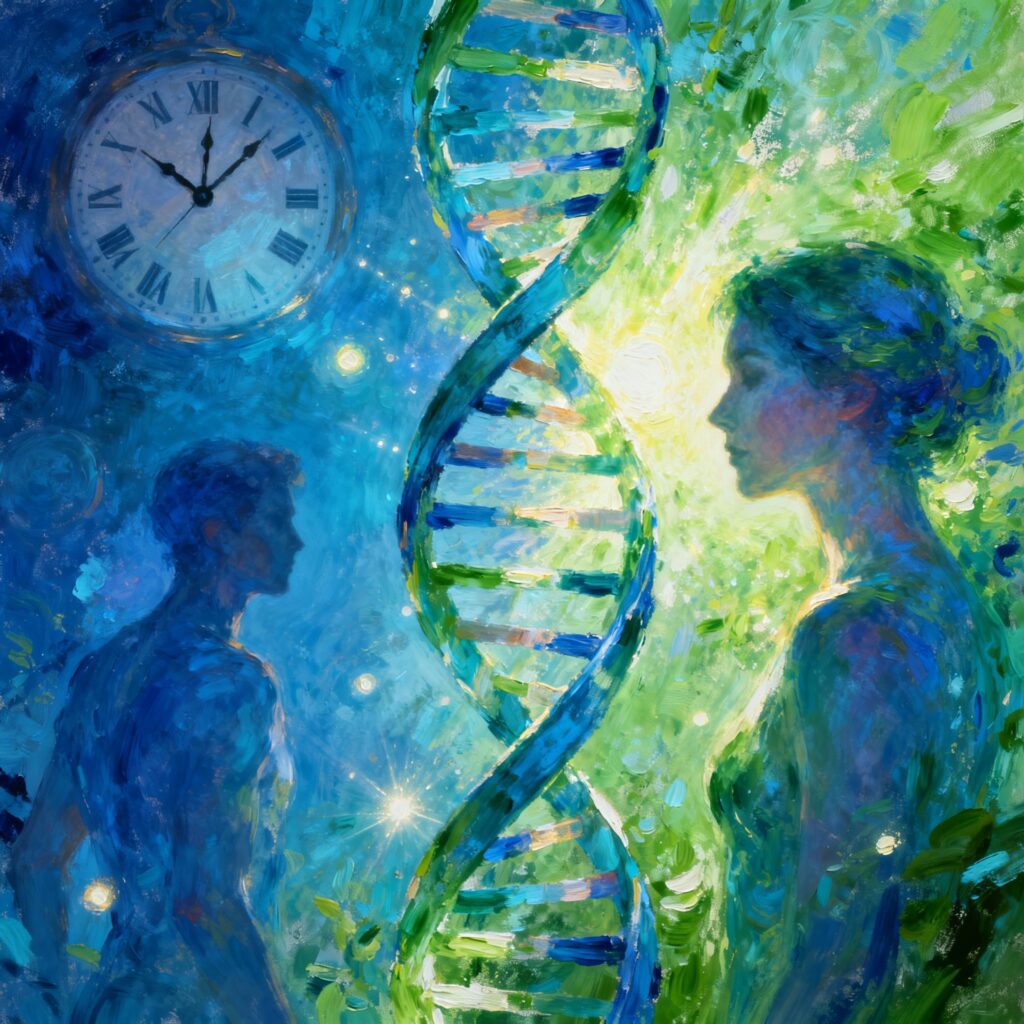
A paint effect image featuring silhouettes and DNA and a clock. This is to symbolise age reversal.
Guides, Longevity, New Things

OSK CRISPR Reprogramming: The Age Reversal Treatment on the Cusp of Fame

Explore the groundbreaking gene therapy age reversal treatment using OSK (Oct4, Sox2, Klf4) CRISPR components that can reverse ageing. This is also a revolutionary scientific breakthrough moving fast from animal studies to human applications. This guide fills knowledge gaps, significantly highlights top expert insights, and presents pivotal studies demonstrating whole-body, continuous reprogramming that reverses age

Longevity, New Things, News

Longevity Pink Podcast Release

The Longevity Pink Podcast has just released its first episode. Please give it a listen. (Just a like is fine if you can spare 30 seconds): Related posts: Here’s Why Indefinite Life Extension Will Never Work, Even Though it Does Groundbreaking Advances in Longevity Research: From Monkeys to Humans Circuspam’s History: The Highlights of our

Longevity

Groundbreaking Advances in Longevity Research: From Monkeys to Humans

Recent developments in longevity research are pushing the boundaries of what we thought possible in extending human lifespan and healthspan. At the forefront of these exciting discoveries is the work of Dr. David Sinclair and his team at Harvard Medical School. Reversing Age in Primates In a groundbreaking study, Dr. Sinclair’s team has successfully reversed

Environment, Longevity

Green Hearts: Exploring the Environmental Influence on Love

Introduction: As our planet faces unprecedented challenges, from climate change to resource depletion, nature has its ways of signalling distress. These environmental cues, subtle yet profound, might influence various aspects of life, including human behaviour and sexuality. Could it be that as the Earth sends signals of distress, there’s a biological response in humans that

Environment, Longevity

Population Dynamics and Environmental Impact: The Urban-Rural Divide

Introduction: In the global discourse on population growth and environmental impact, cities often emerge as double-edged swords. On one hand, they stand as beacons of productivity, innovation, and economic growth, holding the potential to drive solutions that might eventually steer us towards a sustainable future. On the other hand, cities, with their concentrated populations and